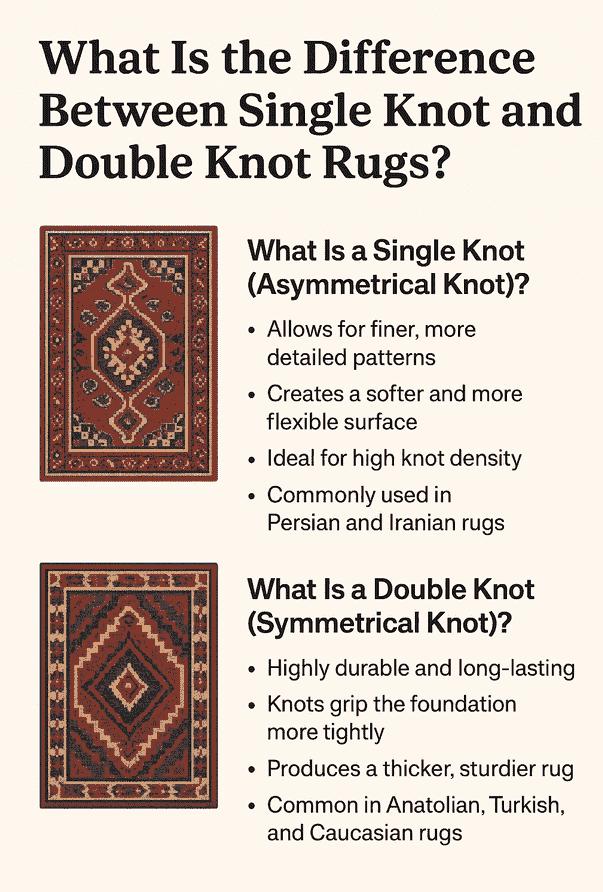
When it comes to handwoven rugs and kilims, one of the most important factors that determines quality is the knotting technique. The two most common methods are the single knot (asymmetrical knot) and the double knot (symmetrical knot). Understanding the difference between these two techniques can help you choose the right rug for your space.
What Is a Single Knot (Asymmetrical Knot)?
The single knot, also known as the Persian knot or Senneh knot, is formed by wrapping the yarn completely around one warp thread and partially around the other.
Characteristics of Single Knot Rugs
- Allows for finer, more detailed patterns
- Creates a softer and more flexible surface
- Ideal for high knot density
- Commonly used in Persian and Iranian rugs
Advantages
- Excellent for intricate and artistic designs
- Elegant appearance
- Lighter and more refined texture
Disadvantages
- Slightly less durable than double knots
- Not always ideal for very high-traffic areas
What Is a Double Knot (Symmetrical Knot)?
The double knot, also called the Turkish knot or Gördes knot, wraps the yarn symmetrically around two warp threads, creating a stronger and more secure structure.
Characteristics of Double Knot Rugs
- Highly durable and long-lasting
- Knots grip the foundation more tightly
- Produces a thicker, sturdier rug
- Common in Anatolian, Turkish, and Caucasian rugs
Advantages
- Excellent resistance to wear and tear
- Ideal for high-traffic areas
- Firm and solid feel underfoot
Disadvantages
- Less suitable for extremely fine details
- Surface may feel firmer compared to single-knot rugs
Which Knot Type Is Better?
There is no single “better” option — it depends on how the rug will be used:
- Living rooms, display spaces, or decorative settings → Single knot
- Entryways, family rooms, or heavy-use areas → Double knot
Both knot types are highly valued in vintage rugs and kilims, especially when craftsmanship and authenticity are preserved.
The Importance of Knot Type in Vintage Rugs and Kilims
In vintage rugs and kilims, the knotting technique directly affects:
- Durability
- Age verification
- Artistic and collector value
- Overall pricing
Handwoven vintage kilims, in particular, gain much of their identity and value from the knot structure and weaving tradition.